Whether you are welcoming a puppy, kitten, rabbit, or bird, the weeks before and after adoption set the tone for years of life together. Fortunately, this guide walks you through every stage so you feel confident, prepared, and genuinely excited rather than overwhelmed.
Why Preparation Matters More Than You Think
Most new pet owners focus on the excitement of day one — the photos, the cuddles, the name reveal. What catches people off guard, however, is everything that happens after the front door closes.
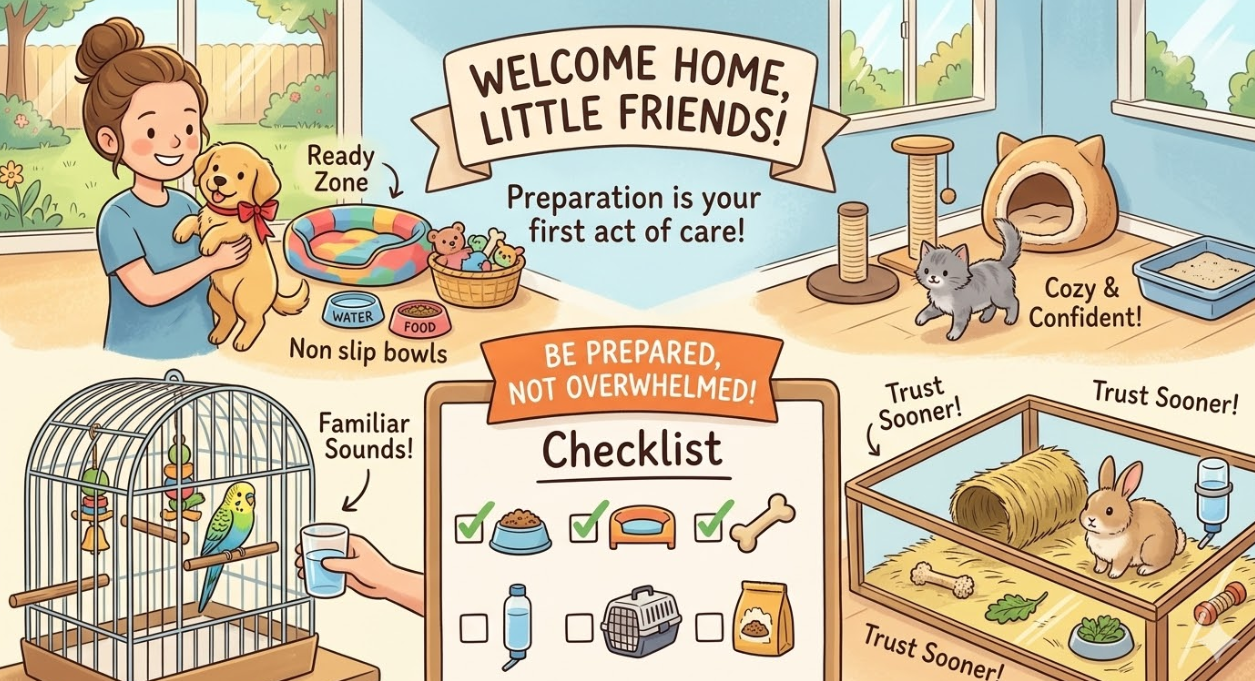
Pets experience significant stress when moving to a new environment. Familiar smells disappear. Routines collapse. Sounds are foreign. As a result, a well-prepared home does not just make life easier for you — it actively helps your new companion settle faster, eat better, and trust sooner.
Think of preparation, then, as the first act of care you give before your pet even arrives.
Step 1: Choose the Right Pet for Your Lifestyle
Before buying a single item, be honest with yourself about your daily life. For instance, a high-energy border collie needs two or more hours of vigorous exercise daily. Similarly, a Maine Coon cat will demand attention and grooming sessions several times a week. Meanwhile, a pair of guinea pigs needs daily interaction, fresh vegetables, and a surprisingly large enclosure.
Ask yourself:
- How many hours per day am I away from home?
- Do I live in a house with a yard or a small apartment?
- Do I have children, older family members, or other pets?
- What is my realistic monthly budget for food, supplies, and vet care?
- Am I looking for a companion that is hands-on or more independent?
Ultimately, matching your lifestyle to the right species and breed prevents the heartbreak of rehoming down the line. Shelters and reputable breeders alike will respect you more for asking hard questions upfront.
Step 2: Build Your Supply List Before Pickup Day
Walking into a pet store without a list is one of the fastest ways to overspend and still come home missing something critical. With that in mind, below is a solid starting framework that applies to the most common household pets.
Dogs and Puppies
- Collar with ID tag and a properly fitted harness
- Leash (standard 1.5 to 2 metre lead for walks; a longer training lead for recall work)
- Crate sized so the dog can stand, turn around, and lie flat
- Dog bed or crate mat with washable cover
- Food and water bowls (stainless steel is easiest to keep hygienic)
- Age-appropriate food recommended by your vet or breeder
- Puppy pads if house training has not started
- Enzymatic cleaner for accidents
- Basic grooming kit including brush, nail clippers, and dog-safe shampoo
- Puppy-safe chew toys and enrichment puzzles
- Puppy-proofing supplies such as cabinet locks and cord protectors
Cats and Kittens
- Litter box with low entry point for kittens; one box per cat plus one extra
- Unscented clumping litter (most cats strongly prefer this)
- Litter scoop
- Covered carrier for travel and vet visits
- Scratching post or cat tree
- Interactive toys including wand toys, crinkle balls, and puzzle feeders
- Separate food and water bowls kept away from the litter area
- Age-appropriate wet and dry food
- Nail clippers and a soft brush appropriate for coat type
Small Mammals (Rabbits, Guinea Pigs, Hamsters)
- Appropriately sized enclosure or hutch with solid flooring
- Safe bedding such as paper-based or fleece
- Water bottle or heavy ceramic water bowl
- Food bowl and hay rack
- Species-specific pellets and unlimited fresh hay for rabbits and guinea pigs
- Safe chew toys and wooden hides
- Exercise wheel (solid surface only, not wire) for hamsters
Birds
- Appropriately sized cage with horizontal bars for climbing
- Multiple perch styles and widths to support foot health
- Foraging and enrichment toys rotated regularly
- Species-appropriate pellet diet supplemented with fresh vegetables
- Cuttlebone or mineral block
- Covered sleeping area and cage cover for nighttime
Step 3: Find a Veterinarian Before You Need One
This is the step most new owners skip. Do not. Instead, book a wellness appointment with a local, reputable vet before your pet arrives home, or schedule it for within the first 48 to 72 hours of arrival.
What a First Vet Visit Covers
A first vet visit typically includes a full physical examination, parasite screening, vaccination review, microchipping if not already done, and a discussion about diet, spaying or neutering, and preventative care schedules.
How to Choose the Right Vet
When choosing a vet, look for:
- A practice experienced with your specific type of animal (specialist vets for rabbits, birds, and reptiles)
- Clear pricing transparency or a wellness plan option
- Online booking and emergency after-hours contact
- Good reviews from pet owners in your area
Above all, establishing a relationship with a vet before an emergency happens means you have someone who knows your animal’s baseline when it matters most.
Step 4: Pet-Proof Your Home Room by Room
Think of your home from your pet’s perspective. A curious puppy, for example, sees dangling cords as toys. Likewise, a kitten sees an open washing machine drum as a cozy nap spot. A rabbit, meanwhile, can chew through baseboards, wallpaper, and electrical cables with surprising speed.
Kitchen and Bathroom
- Lock away all cleaning products, medications, and supplements
- Keep toilet lids closed
- Store food in sealed containers and ensure rubbish bins are secured
Living Areas
- Bundle or conceal electrical cords
- Move toxic houseplants out of reach or out of the home entirely
- Secure bookshelves and furniture that could tip
- Block access to fireplaces and vents
Toxic Plants to Remove or Relocate
Many common houseplants are toxic to pets. These include but are not limited to:
- Lilies (highly toxic to cats, can cause kidney failure)
- Sago palm (toxic to dogs and cats)
- Pothos and philodendron (toxic to dogs, cats, and rabbits)
- Aloe vera (mildly toxic to dogs and cats)
- Peace lily and dieffenbachia
A full list is available through your national veterinary association or the ASPCA Animal Poison Control database.
Step 5: Set Up a Safe, Dedicated Space
Your new pet should not have free reign of your entire home from the moment they arrive. Instead, a smaller, clearly defined space reduces stress, limits dangerous explorations, and gives your pet a consistent retreat when they feel uncertain.
Dogs do well in a crate placed in a low-traffic but not isolated area. Cats, on the other hand, benefit from a single quiet room stocked with their litter box, bed, food, and water for the first few days. Small mammals and birds rely on their enclosure as their entire world, so both the setup and location of that space matter greatly.
If possible, add something that smells familiar. Even a blanket from the breeder, shelter, or foster home can provide enormous comfort during the first 24 to 48 hours.
Step 6: Understand the Basics of Nutrition
Feeding your pet correctly is one of the single highest-impact things you can do for their long-term health. Indeed, bad nutrition quietly contributes to obesity, joint problems, dental disease, and shortened lifespan in every species.
Feeding Guidelines by Species
Dogs: Feed a complete and balanced commercial food appropriate for life stage (puppy, adult, senior). Avoid free feeding and instead stick to two meals per day for most breeds. Also avoid onions, garlic, grapes, raisins, chocolate, xylitol, and macadamia nuts.
Cats: Cats are obligate carnivores and therefore require meat-based protein. Wet food is strongly recommended for hydration. Avoid feeding dogs-only foods, as cats have different requirements for taurine and arachidonic acid. Additionally, avoid onions, garlic, raw fish in excess, and alcohol.
Rabbits: Hay makes up 80 percent or more of their diet. Fresh leafy greens such as romaine, kale, and herbs supplement daily, while pellets should be given in small, measured amounts. Avoid sugary fruits as regular staples.
Birds: Species-specific pellets should form the base of the diet, not seed mixes, which are high in fat. Supplement with fresh vegetables and limited fruit. Never, under any circumstances, give avocado, chocolate, caffeine, onions, or alcohol.
Transitioning to New Food
Regardless of species, always transition new foods gradually over seven to ten days to avoid digestive upset.
Step 7: Start Training From Day One
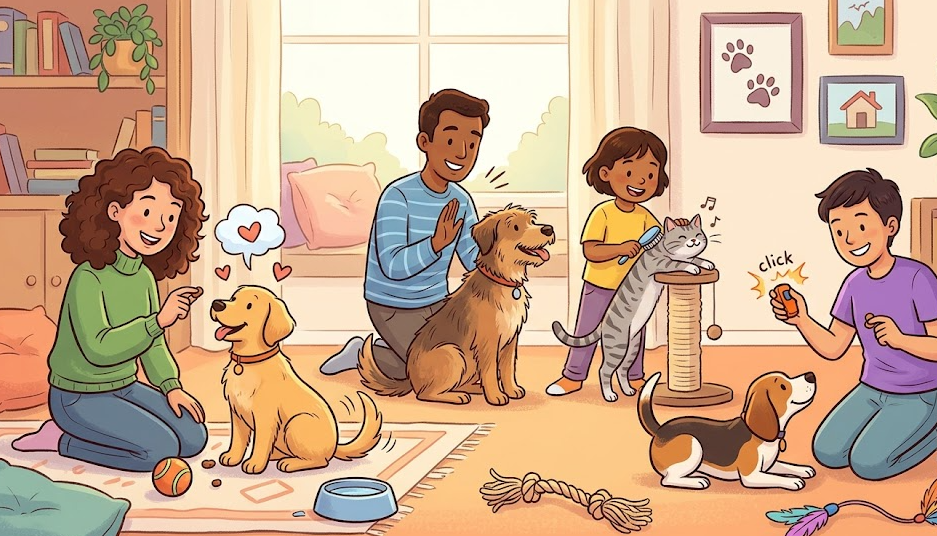
Training is not just about commands. Rather, it is about communication, trust, and building a relationship. The earlier you begin, the more naturally your pet learns that your signals predict good things.
Training Priorities for Dogs
For dogs, focus first on:
- Name recognition
- Sit
- Recall (come when called)
- Leave it
- Loose leash walking
Use positive reinforcement consistently. Short sessions of three to five minutes repeated multiple times per day outperform long, exhausting sessions. In addition, puppy classes are a highly worthwhile investment for both socialisation and guided instruction.
Training Tips for Other Pets
For cats, litter training is largely instinctive, but you can still positively reinforce use of scratching posts, carrier acceptance, and basic handling for vet visits using treats and calm praise.
For birds and small mammals, focus initially on hand-taming and teaching your pet that human presence means safety and food rather than threat.
Step 8: Budget Realistically for the Long Term
Many first-time pet owners underestimate the ongoing cost of pet ownership. Being prepared financially, however, protects both you and your animal.
Estimated Annual Costs
Rough annual cost ranges vary significantly by region, species, and individual animal health. Nevertheless, a general framework for dogs in many Western countries puts baseline costs between 1,200 and 3,000 euros or dollars per year for food, routine vet care, and supplies. Unexpected illnesses or injuries can, furthermore, add thousands more in a single year.
Ways to Manage Pet Costs
Pet Insurance: Most effective when purchased while the animal is young and healthy, before any conditions are listed as pre-existing.
Dedicated Savings Account: Set aside a fixed amount each month into a fund reserved solely for pet expenses.
Wellness Plans: Many vet practices offer monthly plans that cover routine care at a reduced effective rate.
Do not wait until a crisis to figure out how you would pay for emergency treatment. A pet owner who has thought this through in advance is, ultimately, a far more resilient caretaker.
Step 9: Socialisation and Enrichment
A pet that is well socialised and mentally stimulated is a happier, calmer, and better-behaved companion. This is not optional enrichment — rather, it is a core part of basic care.
The Puppy Socialisation Window
For puppies, the critical socialisation window runs from approximately three to fourteen weeks. During this time, positive exposure to different people, environments, sounds, surfaces, and animals lays the groundwork for an emotionally stable adult dog.
Enrichment for Cats, Birds, and Small Mammals
For cats, enrichment can include window perches with outdoor views, puzzle feeders, rotation of toys, and regular interactive play sessions using wand toys.
For birds and small mammals, meanwhile, mental stimulation comes from foraging opportunities, novel objects, and social interaction with you and, where appropriate, other animals of the same species.
Ultimately, boredom and under-stimulation are leading causes of destructive behaviour across all species. A destructive pet is almost always, therefore, a bored or anxious pet.
Step 10: Know When to Call the Vet
New pet owners often struggle to distinguish between normal adjustment behaviour and genuine medical concern. As a general rule, here are clear red flags that warrant a prompt vet call regardless of species:
- Refusal to eat or drink for more than 24 hours
- Vomiting or diarrhoea that persists beyond two to three episodes
- Lethargy, unresponsiveness, or difficulty moving
- Discharge from eyes, ears, or nose
- Laboured breathing or open-mouth breathing in cats
- Visible wounds, swelling, or limping
- Straining to urinate or defecate
- Pale, blue, or white gums
- Seizures or collapse
When in doubt, call your vet. A quick phone triage conversation costs nothing and, moreover, may prevent a serious situation from worsening.
FAQ
Most dogs adjust within two to four weeks, though some rescues with difficult histories can take three to six months to fully decompress. Cats typically begin showing their true personality within two to four weeks as well. Small mammals and birds may take longer to become comfortable with handling but can show significant progress within a month of consistent, gentle interaction. Give your pet time and avoid overwhelming them with visitors or stimulation in the first week.
Yes, and the best time to get it is while your pet is young and healthy. Pet insurance works by covering unexpected future costs. It does not cover pre-existing conditions, so waiting until something goes wrong means that specific condition will likely be excluded from coverage forever. A single emergency surgery or overnight hospitalisation can easily exceed 2,000 to 5,000 euros or dollars. Insurance provides a meaningful financial safety net.
Young animals need more frequent visits. Puppies and kittens typically need a vet visit every three to four weeks from around six to eight weeks of age until they complete their initial vaccination series at around sixteen weeks. After that, healthy adult dogs and cats generally need a wellness check once per year. Senior pets benefit from twice-yearly visits. Small mammals and birds should see an specialist vets at least once per year since they are prey animals that mask illness well.
A new pet refusing food for the first twelve to twenty-four hours is usually stress-related and not an immediate emergency. Offer familiar food in a quiet space without hovering. For puppies, kittens, and small mammals, however, not eating beyond twenty-four hours can become dangerous quickly and warrants a vet call. If your pet is also lethargic, vomiting, or showing any other symptoms, do not wait. Cats in particular can develop hepatic lipidosis (fatty liver disease) from extended periods of not eating.
It depends on the species and your experience level. Two kittens adopted together often bond well and keep each other entertained, which can actually reduce destructive behaviour. Two puppies at the same time, however, is a well-documented challenge sometimes called littermate syndrome, where the pups bond more strongly with each other than with you and may struggle with individual training and separation. For first-time dog owners, one puppy at a time is strongly recommended. For guinea pigs and some bird species, keeping at least two is actually an animal welfare requirement in many countries.
Final Thoughts
Bringing a pet home is the beginning of a relationship that will shape years of your life. The most successful pet owners are not the ones who had it all figured out from the start. They are the ones who stayed curious, asked questions, built routines, and kept showing up even on the hard days.
You do not need to be perfect. You need to be prepared, patient, and present. This guide gives you the foundation. Your pet will teach you the rest.
This article is intended as general guidance for first-time pet owners. Always consult a licensed veterinarian for advice specific to your individual animal’s health, breed, and circumstances.