Dog separation anxiety is a common condition where dogs experience genuine panic when left alone. It’s not bad behavior. It’s genuine distress. Recognizing the signs early and responding with patience and structure is the key to helping your dog feel safe.
What are the most common signs of dog separation anxiety?
Before treating the problem, identify it. Common signs include:
- Excessive barking or howling when alone
- Destructive chewing or scratching at doors
- Indoor accidents despite being house-trained
- Pacing, drooling, or trembling before you leave
- Escaping or attempting to escape the home
source: American Kennel Club
Is It Separation Anxiety or Isolation Distress?
Many dog owners assume their dog has separation anxiety. However, the two conditions are not the same, and the difference matters.
Separation anxiety means your dog is bonded to one specific person. When that person leaves, the dog panics. Isolation distress means your dog simply cannot handle being alone at all. In that case, any human presence calms them down.
So, before you start a treatment plan, test this. Leave your dog with a family member or friend. If the distress stops, you are likely dealing with isolation distress, not separation anxiety. That is actually good news. Isolation distress is generally easier to address.
Never Punish Anxiety-Related Accidents
This rule is non-negotiable. Never punish your dog for accidents, destruction, or noise caused by separation anxiety or isolation distress.
Your dog is not acting out of spite. They are in a state of panic. Punishment adds fear on top of fear. It increases the anxiety, damages your bond, and slows down recovery significantly.
Furthermore, dogs cannot connect a punishment to something that happened while you were away. They only experience confusion and added stress. Therefore, clean up calmly, say nothing, and focus on the treatment steps below instead.
Departure Cues: Why Your Dog Panics Before You Even Leave
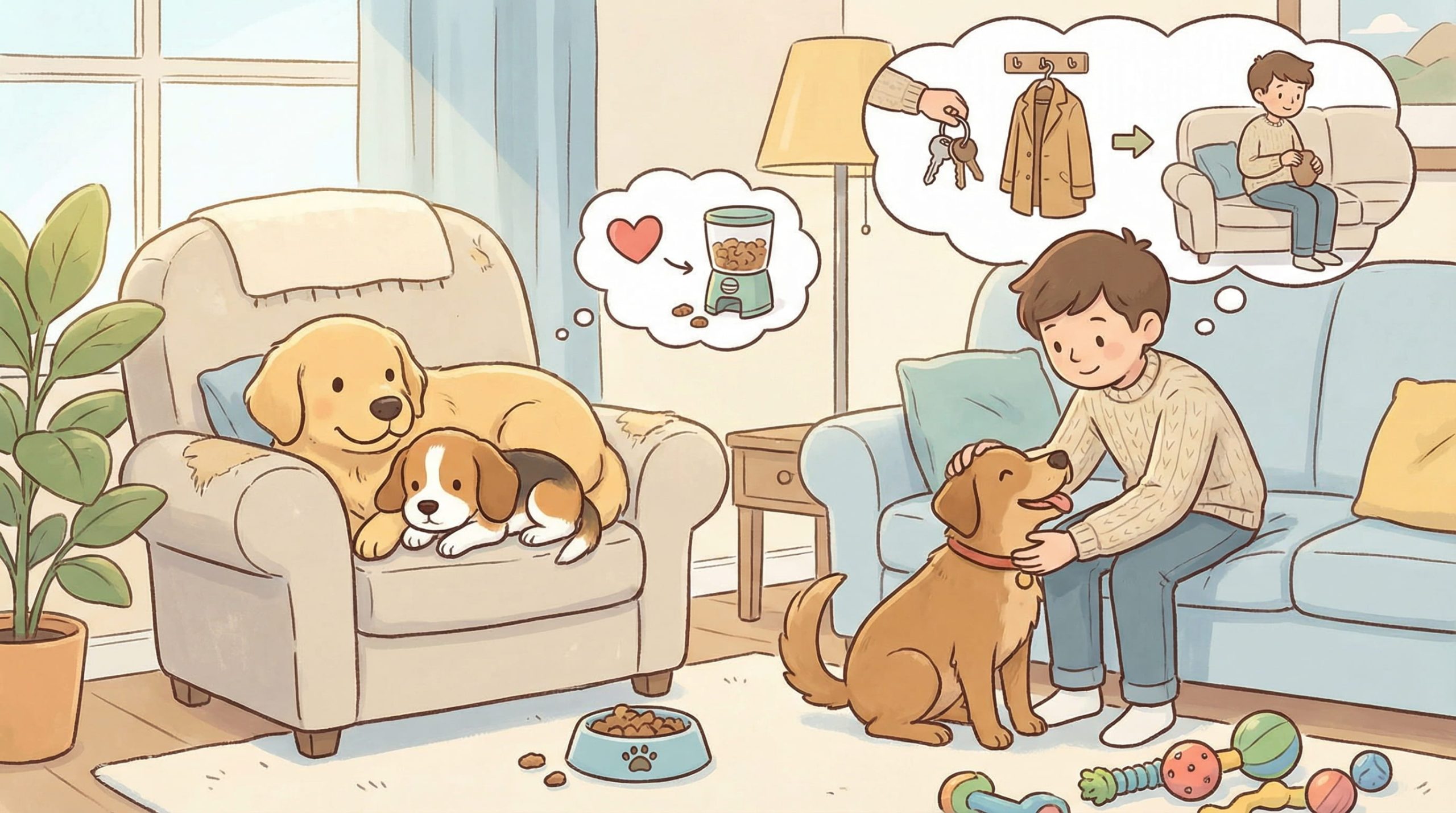
Here is something most owners do not realize. Your dog does not start panicking when the door closes. They start panicking when they hear your keys.
Dogs learn your departure routine faster than you think. The moment you pick up your keys, put on your shoes, or reach for your coat, their stress response activates. By the time you actually leave, they are already in full panic mode.
This is called a departure cue trigger.
Try the “Keys and Shoes” Test
Pick up your keys and then sit back down on the couch. Do not leave. Just pick them up and do nothing.
Watch your dog. If they tense up, pace, whine, or stare at the door, you have confirmed that departure cues are driving the anxiety. The leaving itself is almost secondary at that point.
The Desensitization Drill
The goal is to break the association between your keys and your departure. Here is how to do it.
- Pick up your keys. Sit down. Wait one minute. Put them back.
- Put on your shoes. Sit down. Watch TV for a few minutes. Take them off.
- Put on your coat. Go to the kitchen. Come back. Hang it up.
Repeat these steps daily. Do not leave. The point is to make these actions boring and meaningless to your dog. Over time, they stop predicting your departure and the anxiety response weakens.
Also, vary the order of your routine. Put your shoes on before your coat sometimes. Grab your keys after breakfast instead of at the door. This prevents your dog from reading the sequence as a reliable signal.
The 5-Step “Calm Departure” Training Protocol
Once your dog is no longer triggered by your keys or shoes, you can begin teaching them that your actual absence is not a high-stakes event. Follow this gradual plan:
Step 1: The “Fake Out” Departures
Begin leaving the room for very short periods—not even long enough for your dog to get stressed.
- The Drill: Walk into another room and close the door. Return immediately. Praise your dog quietly for staying calm. Gradually increase this to 30 seconds, then 1 minute.
Step 2: Establish a “Safe Zone” Association
Give your dog a specific place (a crate, a high-quality bed, or a specific room) where “the best things” happen.
- The Drill: Only give high-value treats—like a frozen peanut butter toy or a long-lasting chew—when you are about to step away. This creates a “Positive Association”: your departure now equals a special reward.
Step 3: The 5-Minute Absence
Once your dog is comfortable with you being in another room, try the front door.
- The Drill: Step outside the front door, wait 2 minutes, and come back in. Crucial: When you return, stay calm. Do not have a “big reunion.” If you act like your return is a massive celebration, it reinforces the idea that your absence was a scary event.
Step 4: Gradual Duration Building
Slowly increase your time away in 5 to 10-minute increments.
- Pro Tip: Use a home security camera to watch your dog. If they start pacing or whining at the 15-minute mark, your next session should be shorter (10 minutes). You always want to return before the panic starts.
Step 5: Professional Consultation
If your dog’s anxiety involves self-harm, constant howling, or extreme destruction that doesn’t improve with these steps, it is time to seek professional help.
- The Action: Consult a certified veterinary behaviorist (VB). In severe cases, short-term anti-anxiety medication can “lower the ceiling” of their panic so that the training above actually becomes effective.
Set Up a Calming Space for an Anxious Dog
- Choose a quiet room or corner away from front doors and windows
- Place a comfortable, washable dog bed or crate with soft bedding
- Add a worn t-shirt or blanket with your scent
- Install a pheromone diffuser nearby
- Set a radio or TV to a calm station (classical music or nature sounds work well)
- Introduce your dog to the space while you’re home so it becomes a positive, familiar place
Frequently Asked Questions (FAQ)
Dog separation anxiety is a behavioral condition where a dog becomes extremely stressed when separated from their owner or primary caregiver. It goes beyond normal clinginess. Dogs with this condition may bark continuously, destroy furniture, or injure themselves trying to escape.
The most common signs of separation anxiety in dogs include excessive barking, destructive behavior, indoor accidents, pacing, and attempts to escape. These behaviors typically occur shortly after the owner leaves and stop when the owner returns.
Causes vary but often include sudden changes in routine, a traumatic experience alone, rehoming, or never learning to be comfortable independently. Puppies and rescue dogs are especially prone to separation anxiety.
Start with gradual desensitization. Practice short fake departures to build your dog’s tolerance (see our 5-step protocol above). Pair your leaving with high-value treats or puzzle toys. Create a safe, calming space. Use pheromone diffusers or calming sprays. For severe cases, consult a vet or certified trainer.
Yes. Natural options include calming pheromone diffusers (e.g., Adaptil), anxiety wraps, calming supplements with ingredients like L-theanine or valerian root, and leaving on background noise like a radio or TV. Always consult your vet before starting any supplement.
If home-based strategies show no improvement after a few weeks, or if your dog’s anxiety is severe (self-harm, extreme destruction), consult a veterinarian. They may recommend behavioral therapy, medication, or a combination of both.
Yes. Puppy separation anxiety is common, especially in the first weeks after adoption. Early training and gradual alone-time practice can prevent it from becoming a long-term issue
It depends on severity. Mild cases can improve in a few weeks with consistent training. Severe separation anxiety may take months of behavioral modification and, in some cases, medication support.
Key Takeaways
| Strategy | Best For |
|---|---|
| Gradual desensitization | All severity levels |
| Calming aids (diffusers, wraps) | Mild to moderate anxiety |
| Puzzle toys & treat enrichment | Keeping dogs occupied alone |
| Professional training | Moderate to severe cases |
| Veterinary medication | Severe or unresponsive cases |
Always consult a qualified veterinarian or certified dog trainer before starting a treatme